

The Future of Design with AI-Powered CAD
Design is evolving fast and the tools we use need to keep up. Across industries like architecture, engineering and manufacturing, teams are under pressure to deliver better outcomes in less time while managing increasing complexity. Autodesk’s latest advancements in AI-powered CAD are stepping in to meet that challenge.
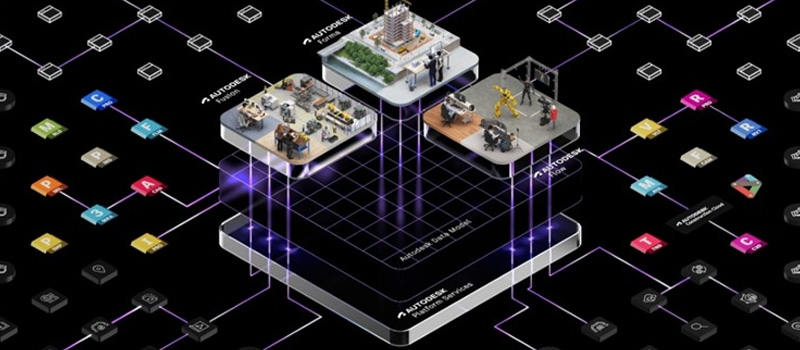
With the introduction of next-generation AI foundation models in Fusion and Forma, Autodesk is redefining how design work gets done. These tools are not just improving workflows, they are changing the way ideas move from concept to reality.
A new way to design
At the early stages of any project, creativity matters most. Designers sketch ideas, explore options and test concepts before committing to a final direction. Traditionally, moving from these rough ideas to detailed CAD models has been a time-consuming process.
AI-powered CAD changes that.
By understanding sketches, data and even workflows, these new models can generate CAD designs almost instantly. This means teams can explore more ideas in less time without getting slowed down by manual modelling tasks. Instead of spending hours building geometry, designers can focus on refining and improving their concepts.
Faster from concept to completion
One of the biggest advantages of this technology is speed. The gap between concept design and detailed development is shrinking rapidly.
With AI assisting in the creation of CAD models, teams can move from an idea to a workable design far quicker than before. This not only saves time but also allows for more iteration. More ideas can be tested, more options can be explored and better decisions can be made earlier in the process.
For businesses, this translates into shorter project timelines and improved efficiency across the board.
Smarter collaboration across teams
Modern projects are rarely done in isolation. Architects, engineers and manufacturers all need to work together, often across different locations and platforms.
When everyone is working from the same intelligent system, collaboration becomes more seamless and more effective.
AI-powered tools in Fusion and Forma help bring these teams closer together by working with connected data and shared workflows. Designs can be generated, refined and shared more easily, reducing miscommunication and rework.
When everyone is working from the same intelligent system, collaboration becomes more seamless and more effective.
Unlocking new creative possibilities
Beyond efficiency, AI is opening up new creative opportunities. Designers are no longer limited by the time it takes to model complex ideas.
With AI handling much of the heavy lifting, teams can experiment more freely. They can test unconventional designs, explore alternative approaches and push the boundaries of what is possible.
This shift allows creativity to take centre stage while technology works in the background to support it.
A more connected design and manufacturing process
One of the most exciting aspects of these AI foundation models is how they connect the entire design and manufacturing journey.
From early concepts through to production-ready models, everything becomes more integrated. Data flows more smoothly between stages, reducing errors and ensuring that designs are ready for real-world application.
This level of connectivity helps organisations build more reliable, data-driven processes that support better outcomes.
Looking ahead
AI-powered CAD is not just an upgrade, it is a fundamental shift in how design and manufacturing will work in the future. As these tools continue to evolve, they will become even more intuitive, more powerful and more embedded in everyday workflows.
For businesses that want to stay competitive, adopting these technologies is no longer optional. It is an opportunity to work smarter, move faster and deliver better results.
Autodesk’s vision for AI in design is clear. It is about empowering people, not replacing them. By combining human creativity with intelligent automation, the future of design is set to become more efficient, more connected and more innovative than ever before.
Autodesk’s vision for AI in design is clear. It is about empowering people, not replacing them. By combining human creativity with intelligent automation, the future of design is set to become more efficient, more connected and more innovative than ever before.